Showing posts with label CurrentEvents. Show all posts

Wednesday, October 2, 2024

"In God We Trust"

Each day my local paper contains a small column called "Today in History", listing things of note that happened on that day. I rarely read the column, but yesterday, for some reason, I did. It contained the following item:

"In 1957, the motto "In God We Trust" began appearing on U.S. paper currency."

I was surprised to realize I was alive when this happened, and so began another deep dive into the bowels of the Internet. Why did this happen? What did this phrase even mean back then? Why was it important to put it on all of our paper currency? Was anyone -- most notably constitutional scholars -- opposed to it at the time? As my brother-in-law would say, these were indeed some of the questions. As I spiraled down the rabbit hole, even more questions emerged.

The first thing I discovered was that "In God We Trust" is the official motto of the United States, approved by Congress and signed into law by President Eisenhower on July 30, 1956.


Some Background

Prior to 1956, the de facto motto of the U.S. was "E pluribus unum", Latin for "Out of many, one". This phrase hearkens back to our nation's founding, July 4, 1776, when the Continental Congress passed the following resolution for the creation of a national seal:

“Resolved, that Dr. Franklin, Mr. J. Adams, and Mr. Jefferson, be a committee, to bring in a device for a seal for the United States of America.”

It took six years, multiple committees and many designs before the Great Seal of the United States was approved. In the end, only one feature of the original committee's design remained untouched: the inclusion of "E Pluribus Unum" to boldly declare the birth of a unified nation from 13 individual colonies.
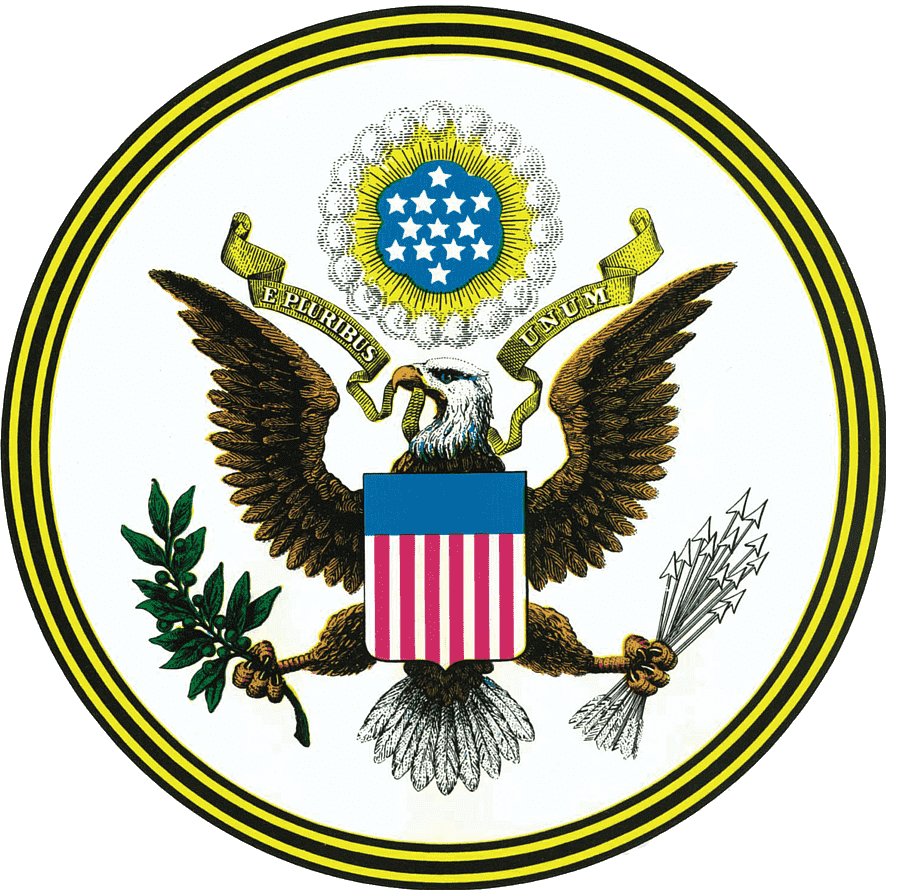
Learning this, a new burning question was immediately raised. What could have possibly caused the nation to believe that a lofty and patriotic motto such as this, created and designed by three of our most educated and respected founding fathers, should be replaced by "In God We Trust"?

Deeper Background

The use of "In God We Trust" dates back to the Civil War, when Reverend M.R. Watkinson, a Protestant minister from Pennsylvania, believed that the government needed to send a clear message that God was on the side of the Union and its army. In 1961, he decided to send the following letter to Samuel P. Chase, the Secretary of the Treasury Department:


Chase acted almost immediately, sending the following letter to James Pollock, Director of the U.S. Mint:

After some back and forth, Chase and Pollack decided that "In God We Trust" should be used as it was similar to "In God is our trust", a phrase found in The Star Spangled Banner. Following congressional approval on April 22, 1864, coins containing this new inscription began circulation.

A few northern newspapers questioned this change. The New York Times, in particular, wrote: "Let us try to carry our religion — such as it is — in our hearts, and not in our pockets". The general populace, though, approved of the change. The controversy disappeared and the inscription now appears on all U.S. currency.

It Finally Becomes the National Motto

In the early 1950's, the U.S. was embroiled in the Cold War abroad and McCarthyism at home. Similar to the demonizing of the enemy that occurred during the Civil War, ministers began denouncing "godless communists" and insisting that the U.S. declare that God was on the nation's side. In the midst of this fervor, Dwight Eisenhower was elected President. By all accounts, Eisenhower was a deeply religious man who wore his faith on his sleeve. While President, he was baptized into the Presbyterian Church, opened Cabinet meetings with a moment of silent prayer, and initiated something called the National Prayer Breakfast. He also appointed the Reverend Billy Graham as his personal spiritual advisor. With this as fertile ground, Florida congressman Charles Bennett sponsored a bill in 1955 to make "In God We Trust", the national motto. His rationale:

“In these days when imperialistic and materialistic communism seeks to attack and destroy freedom, we should continually look for ways to strengthen the foundations of our freedom.”

While not as eloquent or erudite as Franklin, Adams and Jefferson, Bennett's proposal carried the day with Eisenhower. The bill was adopted by Congress and signed into law by Eisenhower in 1956.

 A Bit about the Establishment Clause

Before we go any further, a brief discussion is needed of the Establishment Clause, the opening clause of the First Amendment:

"Congress shall make no law respecting an establishment of religion, or prohibiting the free exercise thereof"

Thomas Jefferson believed that this clause created an iron-clad "wall of separation between Church and State". In 1947, Justice Hugo Black echoed Jefferson's belief, saying: "The First Amendment has erected a wall between church and state," and that this wall "must be high and impregnable". 

With this as an historical backdrop, you might wonder how a national motto centered on God could have penetrated this wall. To date, though, the U.S. Court system has treated this "wall" more like a screen door, allowing the belief in a single Almighty deity to permeate many of the nation's laws and institutions.

In Zorach v. Clauson (1952), while not dealing specifically with the national motto, the Supreme Court stated that the nation's "institutions presuppose a Supreme Being" and that the government's recognition of God does not in any way support the establishment of one religion or another.   

In Aronow v. United States (1970), the U.S. Court of Appeals for the Ninth Circuit specifically ruled that the use of the national motto on currency is "excluded from First Amendment significance because the motto has no theological or ritualistic impact", having only "'spiritual and psychological value' and 'inspirational quality'". Atheists and agnostics aren't being pressured to believe or trust in God in order to live in the United States and use its currency.  

In 1962, Eugene Rostow, Dean of Yale Law, coined a new legal term, ceremonial deism, to refer to any religious reference or practice by the government that has lost its inherent religious connotation due to longstanding use. Per Rostow, these references and practices should now be viewed as simply "cultural rituals". Prominent examples of Rostow's ceremonial deism are the references to a single deity in the national motto and the Pledge of Allegiance. Beginning in 1984, the Supreme Court of the United States began using this term to decide whether to grant an exemption to the Establishment Clause. This leads directly into my final topic.

The Slippery Slope and the Pledge of Allegiance

I've finally reached the real focus of this post: the Pledge of Allegiance. The nation's first pledge  was composed in 1885 by a man named George Balch, an officer in the Union army during the Civil War. 

“We give our heads and hearts to God and our country; one country; one language; one flag!” 
It was rather simple pledge, but it was used by many groups in the U.S. until the 1920's. In 1892, Balch's pledge was revised by Francis Bellamy, a Baptist minister, into a version fairly similar to what is said today. 

"I pledge Allegiance to my Flag and to the Republic for which it stands, one Nation indivisible, with Liberty and Justice for all."

While Bellamy's version omits any mention of God, it had its own special problem. Bellamy recommended that his pledge be recited while performing the Bellamy Salute. It began with the right hand outstretched toward the flag, palm down and ended with the palm up. With the rise of the Nazi party, Congress made the obvious move in 1942 and replaced the Bellamy Salute with a hand over the heart.

Children performing the Bellamy Salute in 1941
 

Also in 1942, the West Virginia Board of Education made it a requirement for school children to recite the Pledge of Allegiance while saluting the flag. Failure to do so would result in expulsion, with parents liable for a fine up  to $50 and jailed up to 30 days. While most families in West Virginia complied with this requirement, it created a major problem for Jehovah’s Witnesses. Their strict interpretation of the bible includes the belief that saluting and pledging allegiance to the flag violated God’s command against worshiping graven images.

After a number of Jehovah Witness children had been expelled, one of the families challenged West Virginia's requirement and filed suit against the Board of Education. In West Virginia State Board of Education vs. Barnette, the Supreme Court unambiguously stated that the Board's compulsory recitation and salute of the flag was a violation of the student's free speech.  

 "If there is any fixed star in our constitutional constellation, it is that no official, high or petty, can prescribe what shall be orthodox in politics, nationalism, religion, or other matters of opinion or force citizens to confess by word or act their faith therein."

Despite this warning from the Supreme Court against forcing citizens to profess an act of faith against their will, the board of directors of the Knights of Columbus (a Catholic organization) adopted a resolution in 1951 to add "under God" into their recitation of the Pledge. Again, this was in direct response to the fears of many Americans during the Cold War of "godless communism". In 1953, congressman Louis Rabaut of Michigan sponsored a bill to add the words "under God" to the Pledge. As with the national motto, President Eisenhower was completely on board with Rabaut's bill. As he signed the bill into law on June 14, 1954, Eisenhower issued a statement that began as follows:

"From this day forward, the millions of our school children will daily proclaim in every city and town, every village and rural school house, the dedication of our nation and our people to the Almighty. To anyone who truly loves America, nothing could be more inspiring than to contemplate this re-dedication of our youth, on each school morning, to our country's true meaning."

It's difficult to understand why Rabaut's bill isn't seen as a violation of the Court's decision in Barnette. The bill endorses a specific religious belief (a single deity) and incorporates this belief into the Pledge of Allegiance, an oath that all citizens of the U.S. are expected to recite regularly. While the belief in a single deity aligns with Judeo-Christian religions, many other religions hold different beliefs. Indeed, many other people don't believe in a God at all.  Per Martha Nussbaum, Professor of Law and Ethics at the University of Chicago, forcing these individuals to affirm that the United States was created "under God” is tantamount to forcing Jehovah Witnesses to give the Bellamy Salute. She further states:

"What, however, about the timid child, or the child who has reasonable worries about stigma and peer pressure? The history of the pledge and of the related school prayer issue makes it obvious that non-participation often comes at a cost. If Ellory Schempp was greeted with outright persecution for reading from the Quran, we can expect that children who refuse to say the pledge—whether they stand in silence, sit, or leave the classroom—will be courting the hostility of teachers, administrators, and, perhaps most clearly, their fellow students. The whole point of the pledge, in the mind of its original supporters, was to put all Americans on record as supporting patriotism, and to inculcate the value of patriotism by a daily required exercise in the schools. From the point of view of these concerns, the non-participating child is bound to look at the very least weird and not fully American, at the worst subversive and threatening."

Proponents of the new Pledge point to the 1952 ruling by the Supreme Court in Zorach v. Clauson  which ruled that the First Amendment couldn't possibly require a complete separation of Church and State because, if it did:

"Churches could not be required to pay even property taxes. Municipalities would not be permitted to render police or fire protection to religious groups. Policemen who helped parishioners into their places of worship would violate the Constitution. Prayers in our legislative halls; the appeals to the Almighty in the messages of the Chief Executive; the proclamations making Thanksgiving Day a holiday; `so help me God' in our courtroom oaths--these and all other references to the Almighty that run through our laws, our public rituals, our ceremonies would be flouting the First Amendment."

All of this seems quite a bit far-fetched. Would it really be that difficult to remove references to God in our government? Would police, fire  and first aid personnel really be prevented from performing their duties at a house of worship?  No matter. If there are, indeed, legitimate concerns, I an in total agreement with the conclusion reached by Martha Nussbaum:

"There are traditional references to religion in our public life that should not be pruned away and that pose no constitutional problem. It is extremely doubtful, however, that the pledge, in its current form, is among them."

Thursday, July 11, 2024

Artificial Turf: Why is this still a thing?

Houston Astrodome, circa 1968

Artificial turf is incredibly resilient, and I'm not referring to its springiness. I'm talking about its amazing ability to survive as a product despite all of its horrible qualities.

A Bit of History

Artificial turf's life began in 1965 when the Houston Astros needed to find a more palatable surface for the Astrodome.  Their original attempt, using a specialized type of natural grass, failed miserably because the dome's semi-transparent ceiling panels didn’t let in enough sunlight. Their second attempt,painting the ground green to make it look like a real baseball field, was a low-tech embarrassment. Their final attempt was to install ChemGrass, an artificial plastic product created by Monsanto. In a stroke of marketing genius, they rebranded it as AstroTurf and it was an instant success. Sports fields all over the United States began using it, indoor and out, giving fans a perpetually green field to look at and athletes a surface with a high degree of traction, even in inclement weather. 

Problems Arise

AstroTurf's popularity began to plummet as its drawbacks became clear. It was a harder and had less cushioning than natural grass, with very little "give". This led to a variety of back and spinal issues. Sliding on it generated a nasty case of "turf burn" on unprotected skin.

Its high degree of traction caused knee and ankle injuries. When installed outdoors, it became extremely hot on sunny days. 

Problems Continue

Modern-day artificial turf has ameliorated some of its original problems, but it is still unpopular with professional athletes.  In September of 2023, the NFL Players Association issued the following statement:

The surface temperature of artificial turf is still a problem . Per the New York State Department of Public Health:

"Synthetic turf fields absorb heat, resulting in surface temperatures that are much higher than the temperatures of the surrounding air. In June 2002 at Brigham Young University (BYU) in Utah, the average surface temperature on a synthetic turf field was reported to be 117°F while the average surface temperatures on natural turf and asphalt were 78°F and 110°F, respectively. A maximum surface temperature of 200°F on the BYU synthetic turf field was reported."

A turf specialist at the University of Missouri reported measuring an air temperature of 138°F at “head-level” height on the university’s synthetic turf field on a sunny 98°F day. The surface temperature of the field was reported to be 178°F."

The artificial turf on opening day at the 2015 Women’s World Cup in Edmonton, Canada was reportedly 120 degrees at kick off. FIFA, the world's governing body for soccer, now requires all World Cup matches to be played on natural grass.

The Environmental Cost

Beyond the harm it can inflict on those playing on it, artificial turf comes with a substantial environmental cost. Proponents of artificial turf attempt to ameliorate these costs by claiming that it doesn't require fertilizer or herbicides, doesn't need to be watered and doesn't need to be mowed by fossil-fueled lawnmowers. These arguments pale in comparison to the amount of environmental damage caused by the creation, use and maintenance of artificial turf.

It's Plastic!

The synthetic grass fibers in artificial turf are commonly made from polyethylene, the most widely produced plastic worldwide. Polyethylene, itself, is made from fossil fuels (usually petroleum) using an energy-intensive process that uses even more fossil fuels!  But once these grass fibers have been created, the environmental impact of artificial turf isn't over. In fact, it has only begun.


It Contains PFAS!

PFAS (short for "per- and polyfluoroalkyl substances") is a collection of man-made chemicals created in the 1940's. It's estimated that more than 10,000 chemicals are currently classified as PFAS. They have an incredibly strong carbon-fluoride bond, a feature used to make many household products resistant to heat, oil, stains, grease, and water. But this strong bond has a big downside. It cannot be broken down by any natural processes, which is why PFAS are called "forever chemicals".  Once a PFAS chemical enters your body it will remain there until you die, which might happen sooner than you'd like.

Two PFAS chemicals (called PFOA and PFOS) are  present in the vast majority of artificial turf. PFOA has been classified as a human carcinogen, while PFOS has been classified as a potential human carcinogen. Because of resource issues, very few of the over 10,000 PFAS chemicals have yet to be tested.

While some vendors claim to be producing PFAS-free turf, subsequent analysis has proven otherwise.  A few months ago, the Center for Environmental Health sent legal notices to Home Depot and Lowe’s demanding that they stop selling artificial turf known to contain high levels of PFAS or, at a minimum, to provide a warning label on their product:

“No one should be inadvertently exposed to toxic chemicals,” said Kizzy Charles-Guzman, CEO of the Center for Environmental Health. “Our lawns are places in our homes where we should be able to play and relax, safely. They should not be spaces where we worry about exposing ourselves to harm. Touching artificial turf lawns can expose us to PFAS chemicals when transferred from the turf to our hands and then our mouth.”

It Degenerates into Cancerous Micro and Nanoplastic 

If you're thinking, "Lucky me! I don't play or walk on artificial turf!", I have bad news for you. PFAS-laced polyethylene will not fully decompose for approximately 1,000 years. Instead, it will degenerate into microplastics and nanoplastics which will make their way into air, soil and water.  In 2022, the EPA reported that 97% of all Americans already have PFAS in their blood. PFAS has even been detected in fetuses.

And then there's this. In 2022, FieldTurf, a producer of artificial turf, stated that the life expectancy of artificial turf is approximately 8-10 years. After that, it should be replaced to ensure proper performance and safety. That means that plastic turf, created using an enormous amount of fossil fuel, will spend 1% of its life as a lawn or athletic field, and 99% of its life as landfill, leaching cancerous microplastic and nanoplastic into the environment.

 It Contributes to Global Warming 

Natural grass absorbs carbon dioxide from the air and emits oxygen. In contrast, artificial turf absorbs no carbon dioxide and emits two greenhouse gases, ethylene and methane. On warm, sunny days, artificial turf can reach a temperature of 200°F, contributing to the "heat island" effect. Per the University of Utah, "lawns and turfgrass act like a swamp cooler—water moves through the plant, evaporating from tiny holes in the leaves and cooling the air."

It Contributes to Stormwater Runoff

Rain falling on natural turf is either absorbed by the vegetation, returned to the environment by transpiration, or filtered through the soil into the underlying aquifer. Artificial turf is an impervious surface. Any rain falling on it will either run off or will be collected by an underground system to be piped elsewhere via the town's stormwater system.  None of the rainwater will reach the aquifer beneath the field.


 It Destroys the Underlying Biome

A biome is defined as a "large, naturally occurring community of flora and fauna occupying a major habitat". In the case of an athletic field or a park, the biome is all of the ground beneath it. Covering this biome with a carpet of plastic effectively kills all of the insects and microbes below by preventing water from infiltrating into the soil, super heating the soil, leaching PFAS and other chemicals into the soil, and eliminating the exchange of gas and oxygen between the soil and the atmosphere. All this has a ripple effect that disrupts the entire food chain for all living things in the area.


 NJ Sierra Club Action Alert on Artificial Turf

Despite its overwhelming health and environmental dangers, artificial turf is still, inexplicably, a popular choice, even in a supposedly environmentally-progressive state like New Jersey.

In 2021, as his first term came to an end, the New Jersey League of Conservation Voters (LCV) labeled Governor Phil Murphy "America's Greenest Governor". In 2024, in the middle of his second term, the LCV no longer felt that way, downgrading Murphy's environmental score from an A to a B+. One reason for the downgrade was that he permitted millions of dollars to be diverted each year from the Clean Energy Fund to other non-environmental initiatives. A few months ago, the NJ Sierra Club began issuing Action Alerts to its  members with a similar refrain:

(click to view alert)

Sierra Club Action Alerts aren't unusual, but this one seemed bizarre, almost surreal, and begged a number of questions.  Why is a grassroots petition needed to inform the erstwhile "Greenest Governor" that artificial turf is bad for the environment?  Why is artificial turf being included in a project overseen by the New Jersey Department of Environmental Protection, a department who's stated goal is to "help New Jersey protect its environment and promote the health of its citizens"? Finally, why is the Green Acres Fund being used for artificial turf? This is a fund that was intended to acquire open spaces and develop lands for recreation and conservation in order to "preserve and enhance New Jersey’s natural environment".

Initially, I thought that this was a joke or, at the very least, a case of the Sierra Club stretching the truth a bit, but it was neither. Per this announcement, Governor Murphy recently approved the use of almost 100 million dollars from the Green Acres fund for community recreation projects throughout the state. While providing assistance to local governments for parks and outdoor recreation facilities is a legitimate use of Green Acres money, 10% of that money will be used to:

  • Create a multi-purpose synthetic turf field in Mount Holly;
  • Replace existing grass fields with synthetic turf at Mercer County Park in West Windsor;
  • Create a synthetic turf field at Tony Canale Park in Egg Harbor;
  • Create a synthetic turf soccer field in Cape May Street Waterfront Park in Harrison ;
  • Install synthetic turf at the playground in James J. Braddock Park in North Bergen.

Laying down acres of plastic grass is clearly not in accord with the Green Acres mission statement, excerpted below from their web site:

"To achieve, in partnership with others, a system of interconnected open spaces, whose protection will preserve and enhance New Jersey’s natural environment and its historic, scenic, and recreational resources for public use and enjoyment."

There is absolutely nothing "natural" about artificial turf. In 2021, when Princeton Township proposed the installation of artificial turf at one of their parks, the Princeton Environmental Commission produced this analysis which concluded that "no artificial turf be installed at Hilltop Park or any other park in Princeton." It's hard to disagree with such a forceful and succinct statement.

Wednesday, April 17, 2024

The Whittier Bridge of Ossipee, New Hampshire

This post serves two purposes. First, it demonstrates how easily my brain can be hijacked and sent careening down a rabbit hole for hours at a time. But it should also leave you feeling happy about yourself, happy you're not a local politician in the state of New Hampshire.

The story begins almost two weeks ago when New Jersey was hit by a magnitude 4.8 earthquake. While it was unnerving to those of us who experienced it, it caused minimal damage and quickly disappeared from the news cycle.Yesterday, though, the local paper decided to milk the story a bit more by running an exposé on the fact that typical homeowners insurance doesn't cover earthquake damage. Stop for a second and imagine you are the reporter tasked to write this story. How in God's name do you make the nuances of homeowner insurance interesting?  Well, hats off to the author, because he found a way to hook me. Since there were no seriously damaged houses to show, he led off his article with this picture:

This is the 264-year old Taylor Grist Mill located in Readington, NJ, with a portion of its front wall partially damaged by the earthquake. But if you expected this article to inform you about this mill's history, the extent of its damage and what it will take to restore it, you were sadly mistaken. It contained exactly one sentence about the mill, a perfect example of journalistic bait and switch.

No matter. I had the Internet at my fingertips and was off and running. I clicked on a bunch of websites and discovered all kinds of interesting things about the mill.  It supplied grain to the Continental Army during the American Revolution and continued to operate into the 20th century. It's on the National Register of Historic Places. It's part of the Taylor's Mill Historic District, and a bridge leading to it within the District was recently replaced in 2006.

Wait.  Hold on. What was that?

That last fact caused my trip down the rabbit hole to come to a screeching halt. I was suddenly reminded of another historic bridge under repair that my wife and I came across while bird-watching in New Hampshire. But where, exactly, was that bridge? When were we there? Did I take a picture of it? The rabbit hole continued, but it had veered onto a brand new path. After a painstaking search through my iPhone photos, I found the picture below, taken on September 1, 2022:

Close scrutiny of the sign at the top of the bridge revealed that it was located in Ossipee, New Hampshire. The game was once again afoot!

I learned that it is a type of bridge called a Paddleford truss bridge and that it was built in 1870 after a prior bridge had been washed off its abutments by a flood in 1869. It is named for the poet John Greenleaf Whittier, who spent his summers in a hotel nearby. I learned that, at 132 feet, it is one of the longest covered bridges in New Hampshire and was listed in the National Register of Historic Places in 1984. 

But that's not all. I also learned that, a few months after I snapped my photo, the Whittier Bridge was moved back on its abutments and opened to pedestrian traffic only. No motorized vehicles of any kind are permitted on it. And then, unexpectedly, the rabbit hole hit rock bottom, landing upon the article below from the Conway Daily Sun. Once I read this story, I knew I was done, a fitting end to my quest.  

It's a JPG file (in case the original web page goes away), so you have to click on it to read. It's a tad long, but its insight into life as a local New Hampshire politician was  unexpected, somewhat amusing and, ultimately, stunning.  


Thursday, February 17, 2022

Wordle, the New York Times and Newspeak


On January 31, 2022, the New York Times announced that it had purchased the rights to a cute little word-playing game called Wordle that had become an international sensation. My first thought was, "Oh no, the Times is going to ruin it. They'll put it behind a paywall or throw advertisements around it." Which was kind of sad because many friends and family members were playing it and it had become a daily source of entertainment, especially the trash-talking. Little did I know what the New York Times would do to it.

My first inkling of their incompetence occurred on February 15th. In their haste to cut over from the old version on a UK server to their version on a NYT server, both servers were active. Inexplicably, if you connected to the UK version, the word of the day was AGORA. If you connected to the NYT version, the word of the day was AROMA. This should have immediately set off an alarm bell in my head. After all, the true genius of the game is how simply it is constructed. Its code contains the entire database of words that can be used for answers, and each answer is linked to a specific date. As such, the only way that the two versions could yield different answers is if the list of possible answers had been altered. And that's exactly what had happened.

By an astounding coincidence, the first Wordle word of the NYT era was AGORA, a word that is pretty obscure to the average American. As such, the NYT decided to eliminate it from the list of valid answers and the word AROMA (the next word on the list) was used instead. While they were eliminating words, The Times also decided to get rid of words with British-specific spelling like FIBRE, which also seemed reasonable.

Then, they went berserk. 

Someone managed to convince the powers that be that "sensitive or offensive" words needed to be eliminated too. Words like SLAVE, WENCH, WHORE and LYNCH. Not only would these words never appear as answers, they would not even be accepted as guesses. Ironically, all of these words can be found in articles written by the Times!

With this in place, imagine your frustration when you're in mid-Wordle and the consonants W, H, and R are still in play along with the vowels E and O. Maddeningly, you'll be unable to guess WHORE.  Almost certainly it wouldn't be the correct answer to the puzzle but it would greatly improve your chances of winning on the next guess. 

But that's actually the least objectionable aspect of this.

When a friend of mine heard about this, he sent me a one-word text: Newspeak. If you're unfamiliar with the term it probably means you've never read "1984", the classic novel by George Orwell. Newspeak was the official language of Oceania, a totalitarian regime, and was used to restrict ideas, thoughts and communication. As an example, Newspeak didn't have a word for freedom, so the concept of freedom didn't exist either. Negative words were replaced by words preceded by "un-"; the word "bad" became "ungood". Orwell's warning: a government that creates the language and mandates how it is used can control the minds of its citizens.

The NYT is hardly a totalitarian regime. But it was dabbling in a bit of Newspeak when it decided to eliminate a perfectly valid collection of non-obscene words from our thought process. Yes, enslaving someone is objectionable, but knowing about slavery, being able to converse about slavery or being able to joke that you are a "slave to your job" is perfectly reasonable. Calling a woman a "bitch" might be harsh but commiserating with someone by saying "life's a bitch" is hardly objectionable.

By calling these words "insensitive or offensive" and eliminating them from being used in a silly little word game, the NYT gave credence to all of its detractors who constantly accuse them as being absurdly politically correct. 

Postscript:

The above Letter to the Editor was never published by the New York Times. In fact, I never got any response whatsoever from the Times. So, as promised, I canceled my subscription on February 23, 2022. But I wasn't able to unsubscribe simply by email. The Times made me interact via chat with an individual labeled as "steven". Our exchange (edited for brevity) can be read by clicking here.

 Just as I had hoped, my bold and courageous stance against Big Brother-like censorship had made an immediate and undeniable impact:

It's not important that their stock price rebounded to 43.99 less than a week later. My point had been made.


Friday, April 17, 2020

Keeping Grocery Workers Safe


The risks being taken by grocery store workers these days are all too real. On April 13 the United Food and Commercial Workers International Union (UFCW), representing over 900,00 grocery store workers, estimated that 30 of their members have died from COVID-19 and nearly 3,000 are not working because they are quarantined, hospitalized or awaiting test results. When asked what could be done to improve their safety, here's how members responded:
  • Limit the number of customers (72%)
  • Ban unruly customers (49%)
  • Hire more security (41%)
  • Hire more workers to meet demand (26%)
  • Create advertisements with customer safety tips (23%)
The UFCW has also asked shoppers to take the "#ShopSmart Pledge" which includes wearing masks, keeping 6 feet or more from workers and other shoppers, and proper disposal of safety gloves.
    Blissfully unaware of the #ShopSmart Pledge
    All of these suggestions make tremendous sense. The biggest risk by far to grocery store workers is their constant and close proximity to shoppers, any of whom could easily infect them via airborne transmission of the coronavirus. What doesn't make sense is this memo, sent by the President and CEO of the NJ Food Council to mayors of many townships in New Jersey. Inexplicably, the memo concludes that reusable bags are a major health threat to grocery store workers, an issue that wasn't even mentioned by UFCW members. Almost certainly, this memo was motivated by this bit of propaganda created by the Plastic Industry Association. While a dirty reusable bag could conceivably pose a safety issue to its owner, there is no link whatsoever between reusable bags and grocery worker safety.

    There's no denying that a shopper's reusable bag could become infected with the coronavirus. But so could every other object within the store, including the paper and plastic bags that are provided. That's why everything you purchase should be washed or put into quarantine when you return home.
       
    While the State of New Jersey hasn't banned reusable bags, my local grocery store now forbids their use, even for customers willing to do their own bagging. Rather than argue the illogic of this policy with an overworked and over-stressed cashier, I settled on a workaround. When asked whether I wanted paper or plastic I responded, “No bags at all, please!” and unloaded my groceries onto the conveyor belt. I then went to the end of the checkout and loaded my groceries back into my shopping cart as soon as they were scanned. I think the cashier really appreciated it. I was done loading and out of her way seconds after she had scanned the last item. I rolled the cart out to my car, loaded everything into reusable bags that were stored in my trunk and went home. I was happy, the store was happy, and the environment was happy.

    Monday, April 13, 2020

    The Ten Plagues Easter Eggs


    Two years ago, Marilynn and I drove to Massachusetts to attend our first-ever Seder with my son, his wife and members of her family. As a (lapsed) Catholic, I figured that the perfect way to bridge the two faiths was to bring our set of Easter eggs based on the Ten Plagues of Egypt.We made them back in the late 90's when all of our kids were either in high school or college. They quickly became a family heirloom, always good for a laugh during the holiday season.

    Sadly, that particular family heirloom never got to experience a Seder. On our way to the event, our 2017 Toyota Prius caught fire in West Hartford and, to quote the incident report, "burned to a shell". Within that burned shell were 10 tiny shells as crispy as potato chips. The heirloom was toast. Worse, we never took a picture of this heirloom, something unheard of in these days of smartphones and Facebook.

    This year we had once again planned to travel to Massachusetts to attend another Seder. Afterwards, we planned to swing over to New Hampshire to spend Easter with my daughter and her family. But another disaster (named COVID) intervened, forcing all of us stay sequestered for the holidays. But desperate times call for desperate measures. It was time to recreate the Ten Plagues of Egypt Easter Eggs!

    Since we all had some time on our hands, we decided to turn this into an event.  The first step was the plague selection process. We quickly determined that the plagues had to be assigned randomly; otherwise we'd all fight over the flagship plague, the "Angel of Death". Each participant's name was written on a Domino Rally tile and all 10 tiles were loaded into another Mullen heirloom: my 1994 Rangers Stanley Cup mug. (They were on well on their way to winning the Cup again this year too!) I then opened a Zoom meeting to allow everyone to bear witness as I randomly drew holy tiles from the Sacred Cup. The resulting Scripture (showing the results of the assignation process) has been preserved and is shown below. If you click on it, you might have a few questions.
    The first thing you'll note is the unique numbering sequence. Rather than the usual boring 1-10 format your grandfather would use, this list breaks into freestyle following "5". Next, you'll note that two plagues were assigned to families. With 10 plagues and 8 adults, we decided to give an extra plague to families with kids living with them. (No symbolism intended!).

    Then there's the assignment of the flagship 10th plague. Somehow, this plague was assigned to the Angel of Death himself! I'm not sure what happened here but clearly the note taker was under more stress than the group realized. Finally, the list also reflects an issue that has bedeviled biblical scholars for thousands of years: What the hell was that Fourth Plague anyway? Some believe that the original Hebrew should be translated as "swarm of insects". However, per the  English version of the Passover Haggadah, this plague should be translated as a "swarm of wild animals". In an attempt to broker a truce between these two warring factions, let me just point out the obvious. When you categorize an item as "animal, vegetable or mineral", an insect is an animal. Therefore, both translations are accurate.  Q.E.D.

    As a bonus, each participant was also tasked to create a "COVID-19 egg". Not all participants participated, though. Some just assumed the role of "idea man" and let their spouse do the actual work. At any rate, we only ended up with six COVID-19 eggs. All the eggs are shown below (click to enlarge). There was talk of having an elaborate scoring system to determine the Ultimate Egg of the contest, but everyone's jaw dropped when they saw the egg at the top of this post. Game over, man. Some of the other plague eggs are superb: the lice, the flies; hell, the Angel of Death works as comic relief and even the River of Blood is surprisingly artistic in an Yves Klein sort of way. But there's no topping that frog in a teacup.  Congratulations, Sara! And congratulations to the entire family for recreating a true Mullen Heirloom!


      Monday, March 30, 2020

      Shopping in the COVID-19 World


      At this point, everyone living in the COVID-19 world undoubtedly understands the importance of sequestering, thoroughly washing your hands, covering your mouth when coughing or sneezing, and keeping a "social distance" from other human beings. You should also be shopping online as much as possible and wiping down packages once they arrive. But what exact procedure should you follow when you have to leave your house to pick up urgently needed items such as food, medicine or home supplies?  The procedure below may seem like overkill but think again. When it comes to the coronavirus, being safe and being "pretty safe" may be the difference between life and death. This procedure will only take a few additional minutes of your time.  You'll get used to it.

      Goal:

      Minimize the chance of catching the coronavirus while shopping

      Assumptions:
      1. You are clean (you don’t have the coronavirus), your house is clean and your car is clean.
      2. You don’t want to disinfect your car, wash your clothes or take a shower when you return home.
      3. You’re wearing a pair of pants with 2 deep pockets.
      4. You have two keys/cards/fobs to operate your car.
      Going out to Shop:
      1. Scrupulously plan your shopping trip.  You want to spend as little time as possible in the store.Before leaving, put a credit card and one of your car “keys” into a small reusable, washable cloth bag. 
      2. Put on your “outside” shoes (i.e., shoes you never wear inside the house).
      3. Put your other car “key”, your wallet and your phone completely in your pockets.
      4. Pack a bunch of reusable washable cloth bags to hold your purchases.
      5. When you arrive at the store, put on a pair of disposable medical gloves. 
      6. Once the gloves are on, don’t touch your face or your clothes.
      7. Bring only what you absolutely need into the store: shopping list; the small bag containing your credit card and key; and reusable shopping bags. Your wallet, phone and second "key" are in your pockets.
      8. Be sure to keep the small bag and your shopping list in your hand or in the shopping cart at all times.  Do not put either item in your pocket!
      9. Shop as you normally would, but maintain a 6’ distance from all other human beings. 
      10. Don’t sit, lean against a wall, or allow your clothes (other than shoes) to come into contact with anything.
      11. When checking out, maintain a 6’ distance from the cashier (your biggest risk on this trip). Put all of your purchases on the checkout counter and bag your purchases at the other end of the counter using reusable washable bags. Use separate bags for items that can be left in quarantine for 3 days to decontaminate.
      12. To pay, use the credit card in the small bag. After paying, put the credit card back in the bag and put that bag in the top of the shopping cart or in a shopping bag where it can be easily reached later.
      13. Put your groceries in the cart and walk to your car. Take the “key” out of the small bag, unlock your car and load your groceries into the trunk. At no time let any of the bags come into contact with your clothing.
      14. Safely take off your gloves (see the graphic below) and discard in a nearby trash can.  If no trash can is available, drop them into a shopping bag for disposal at home. 
      15. Close the trunk without touching the same spot that you used to open it.
      16. Using the key in your pocket, get in your car and drive home. (Your hands and car interior should be clean.)
      Once You Arrive Home:
      1. Put on your “inside” shoes.
      2. Take your purchases out of the trunk. Discard gloves if you still have them.  Your hands are now contaminated.
      3. Bring all non-essentials to a special quarantined area within your house and don't touch them for at least 3 days.  If no area exists, leave them in your garage.
      4. Bring produce, items needed immediately, items needing refrigeration/freezing and the small bag containing your key and credit card to a pre-defined “dirty” counter near your kitchen sink.
      5. Wash your hands with soap and water for 20 seconds.
      6. Thoroughly rinse all produce with cool/cold water; no soap or disinfectant should be used.
      7. Fill a basin in your sink with warm soapy water. Submerge and wash all purchases that can be cleaned in this manner (bottles, cans, items sealed in plastic packaging, etc.)
      8. Spray and wipe down all other items (including your credit card and “key”) with soap and water or disinfectant solution. 
      9. Place all washed items on a pre-defined “clean” counter to be used only for cleaned items.
      10. Put all reusable washable cloth bags into your washing machine.
      11. Wash your hands with soap and water for 20 seconds.
      12. Thoroughly clean all countertops used in the cleaning process.
      13. Since you can’t be sure you won’t need your car within the next 3 days, clean any external areas of your car that you touched while unloading. Cleaning your trunk is optional, but remember that it will be“dirty" for at least the next 3 days!
      14. Clean any doorknobs that you touched and any place that was touched while cleaning your purchases.
      15. Clean the spray bottle and any other items you used during the cleaning process that weren’t discarded.
      16. Put all washcloths and towels that were used in the washing machine.
      17. Clean the places that were touched on the washing machine; throw that cloth in the wash too!
      18. Wash your hands with soap and water for 20 seconds one more time.
      19. Have a drink. I don’t care what time it is. You’ve earned it.


      Thursday, January 19, 2017

      Thoughts on Inauguration Eve

      I have no intention of watching any of this weekend’s Inauguration festivities for the 45th President of the United States.  But I also have no intention of participating in any of the protest marches taking place around the nation.   At this point, Trump hasn't done anything as President of the United States to warrant such an action.  It is true, though, that he continues to do things that border on the ridiculous and the petulant, as though he’s deliberately thumbing his nose at his detractors.   Here are a few of his highlights since Election Day: 
      Rex Tillerson:  Amid fears that Russia possessed comprising information on him, and despite proof that Russia successfully hacked the email accounts of Democratic party leaders during the election and attempted to hack into the U.S. electrical grid, Trump nominated Rex Tillerson as his Secretary of State.  Mr. Tillerson was the CEO of ExxonMobil until last month and is a multi-millionaire with deep ties with Russia dating back to the 1990’s.   He is also strongly opposed to the 2014 sanctions that were imposed on Russia by the EU and the US in response to Russia’s military intervention in the Ukraine.  Those sanctions have already cost ExxonMobil an estimated $1 billion.  Not exactly an appointment that “drains the swamp.” 
      Ben Carson: Following his November victory, Trump nominated Ben Carson for Surgeon General, a position for which Dr. Carson could actually be qualified.  Surprisingly, he declined the position because, as stated by his business manager:  “Dr. Carson feels he has no government experience, he’s never run a federal agency.  The last thing he would want to do was take a position that could cripple the presidency.”  At that moment on that day, I had new-found respect for Dr. Carson.  But it didn’t last long.  A few weeks later, Trump nominated him again, this time to head up the Department of Housing and Urban Development (HUD).  You’d think that Dr. Carson would once again decline, but you’d be wrong.  He quickly accepted the nomination, stating as one of his qualifications, “I grew up in the inner city … and have dealt with a lot of patients from that area”. 
      Betsy DeVos:  Ms. Devos is a Michigan billionaire nominated by Trump to head the Department of Education despite the fact that she has been a longtime foe of public education.  She’s an advocate of the voucher system and the use of public funding to pay for private and religious schools.  The National Education Association (NEA) calls her “dangerously unqualified”, stating that she has “spent decades working to dismantle public education and privatize public schools”.  The ACLU denounced her attempts to “create a voucher system that would divert public money to private and religious schools and erode the bedrock value of separation of church and state.” And then there’s her support for guns in schools, citing grizzly bears in Wyoming as a compelling reason. 
      Rick Perry:  While this sounds like a Saturday Night Live bit, it’s true:  Donald Trump nominated Rick Perry to head up the Department of Energy, the very department that Perry said should be eliminated back in 2012.  While being a scientist isn’t necessarily a prerequisite for the position, it's worth noting that the current DOE head is a nuclear physicist and the guy before him won the 1997 Nobel Prize in Physics.  Rick Perry graduated from Texas A&M with a D+ average in his science courses and supports the teaching of Creationism in public schools.  On the positive side, though, he has appeared on Dancing With the Stars.  That has to count for something.
      Twitter Response to John Lewis:  Trump continues to use Twitter as his main method of communication, retribution and revisionism.  After Congressman John Lewis criticized Trump in a television interview, Trump tweeted, “Congressman John Lewis should spend more time on fixing and helping his district, which is in horrible shape and falling apart (not to mention crime infested) rather than falsely complaining about the election results. All talk, talk, talk – no action or results. Sad!”  He tweeted this despite the fact that Lewis’s district is fairly affluent and his life has been committed to public service and activism, particularly in the cause of Civil Rights. 
      There are more examples (Monica Crowley, Stephen Bannon, Mike Pompeo, etc.) but I think we’ve both had enough. I just want it to be clear that I’m aware of  Trump’s recent actions before you read the next paragraph. 

      --------------------------------------------------------------

      I fervently hope that four years from now, on the eve of the 2021 Inauguration, my candidate, Donald J. Trump, is preparing to embark on his second term as President of the United States.  This has happened because he, once again, has confounded the "lamestream media" and become one of the best and most effective presidents in the history of the United States.  How could he possibly do this?  Well, here’s a scenario:
      • Ruling by caustic tweets that rewrite history, all of Congress – Democrats and Republicans – live in fear of crossing Trump.  In contrast to the last 8 years of a do-nothing Congress, the next four years are marked by a blizzard of new legislation.
      • Since Trump purposely surrounded himself with puppets like Rick Perry and Ben Carson, there is no discord or opposition within his Cabinet or inner circle.
      • Trump appoints two Supreme Court justices in his first term, creating a solid majority that rules in favor of virtually any legislation that he supports. 
      • With all of this power, Trump feels completely unfettered by any promises that he made in the past.  As such, his first term is marked by legislation, social programs and foreign policy that is long overdue and beneficial for the country and the world. 
      That last bullet might be a tad far-fetched, I agree.  But something just that stupefying would have to occur before I could ever vote for Trump.  In the meantime, let's all be very wary of any movement, no matter how faint, to repeal the 22nd Amendment.


      Wednesday, November 9, 2016

      The Trump Presidency and a Glimmer of Hope


      When I realized that Trump had been elected as the 45th President of the United States, I fell into a deep despair.  I wasn't ashamed of being an American, but I was angry, sad and frightened for America. Our ignorance is appalling, and I'm not saying this simply because my candidate lost. Trump won this election because the majority of the electorate believed all of his lies, despite the abundance of unbiased fact-checking that was available to them. They just didn't care enough to read.

      What happens next?  Pundits like Bill Maher believe that this is just the beginning of a "slow right-wing coup" in which Trump, once he gains control, will not give it up.  A year ago such a statement would have been laughable.  After last night, though, anything is possible.  At this point you're probably wondering "Where the hell is that glimmer of hope?" Read on.

      There are two characteristics that epitomize Donald Trump: his huge ego and his skill at lying.  He is such a good liar that he received over 80% of the white evangelical vote, despite the fact that he has been married three times, has admitted to committing adultery, has been caught on audiotape making incredibly misogynistic statements, and has been accused of sexual assault by at least 12 women, one of whom has accused him of raping her in 1994 when she was 13.  Why "in God's name" would evangelicals support this man?  Because he promised that, if elected, he would appoint Supreme Court justices to overturn Roe v. Wade.  That's it.  That's all it took to lock up the white evangelical vote.  But will Trump actually follow through on this promise?  This video from 1999 would suggest otherwise.  In it, Trump characterizes himself as "pro-choice in every respect" and states that he is not even in favor of banning partial birth abortions.  It's impossible to know what Trump truly believes but the "glimmer of hope" is that he will not follow through on most of the promises he made in order to win the election. No wall, no Muslim ban, no repeal of Obamacare, no repeal of Roe v. Wade.

      And then there's the Trump ego.  Everything with Trump has to be the best. The best steaks.  The best University.  The best hotel.  The second "glimmer of hope" is that he truly wants to go down in history as the best President of the United States.  If that's the case, he can't preside over a 4-year train wreck and then leave saying "I was the greatest President ever!" Trump may be the master at controlling our malleable media but he can't control history.  Even he knows that.  So for Trump to truly be the greatest President he is going to have to do a complete about face, work harder than he ever has in his life and lead this country to the "greatness" he has promised.  And, to be honest, with Republican majorities in the both the Senate and the House and with a favorable Supreme Court in the near future, Trump will be in a much better position to do this than Hillary would have been had she been elected last night.

      As I said, though, this is only a glimmer of hope, one that will keep me functioning for the next few days.  If Trump appoints Chris Christie as his Attorney General, Rudy Giuliani as head of the FBI, and Sara Palin for Secretary of the Interior, then all is lost. 

      Wednesday, June 22, 2016

      Why I'm Special


      Everybody's special, right?  Isn't that what your Mom always told you?  Finding out what makes you special, though, isn't always easy.  I'm proud to say that I finally figured it out.  

      Today is my birthday, June 22.  (Thanks for the card!)  As a kid I always equated my birthday with the first day of summer, otherwise known as the summer solstice.  Whenever I mentioned this to other people, though, I was almost always told, "No way kid, the summer solstice is on June 21st", and that would be the end of that.  I didn't care enough to dig into it further. 

      A couple of days ago, though, I read that this year's summer solstice (in the northern hemisphere) was on June 20th.  That was two days ago!  How could I have been that wrong as a kid?  There's no way I was off by two full days.  It was time to go down the Internet rat-hole and investigate.  

      It was a quick investigation.  My first stop was, of course, Wikipedia, which authoritatively stated that, "depending on the shift of the calendar, the summer solstice occurs some time between June 20 and June 22 in the northern hemisphere".  It also displayed the table shown on the right which provided the dates of the summer solstice between 2010 and 2020. If you click on that graphic, though, you'll notice that June 22 does not appear anywhere.  What gives?  At this point, Wikipedia does a fairly poor job of explaining, citing simply the "leap shifting in the Gregorian Calendar" as the cause.  In a nutshell this refers to the fact that the Gregorian Calendar is slightly out of sync with the Astronomical Calendar, requiring corrective measures like leap-days and leap-seconds.  There's undoubtedly a much more academic discussion of this phenomenon somewhere on the web but I'm not interested in searching for it and you sure as hell aren't interested in reading it.

      But here is something that is interesting and what makes me so special.  This website contains a table showing the exact date of the summer solstice in the northern hemisphere from the years 1600 to 2400.  In that 800 year span, it occurs on June 22 exactly 87 times.  And -- you guessed it -- one of those times was in 1955, the year I was born.  Yes!!  I win the game!!   I was born on the summer solstice!!!  

      One other thing.  Since my birth, the summer solstice has occurred on June 22 only five times, the most recent being in 1975.  Amazingly, it won't happen again until the year 2203!  So from a slightly skewed viewpoint, I'm not 61 today.  From a Gregorian/Astronomical Congruence viewpoint, I'm only 5, and I won't be 6 for a very, very long time.  Naturally, birthday cards and presents will be graciously accepted on a Gregorian basis.